


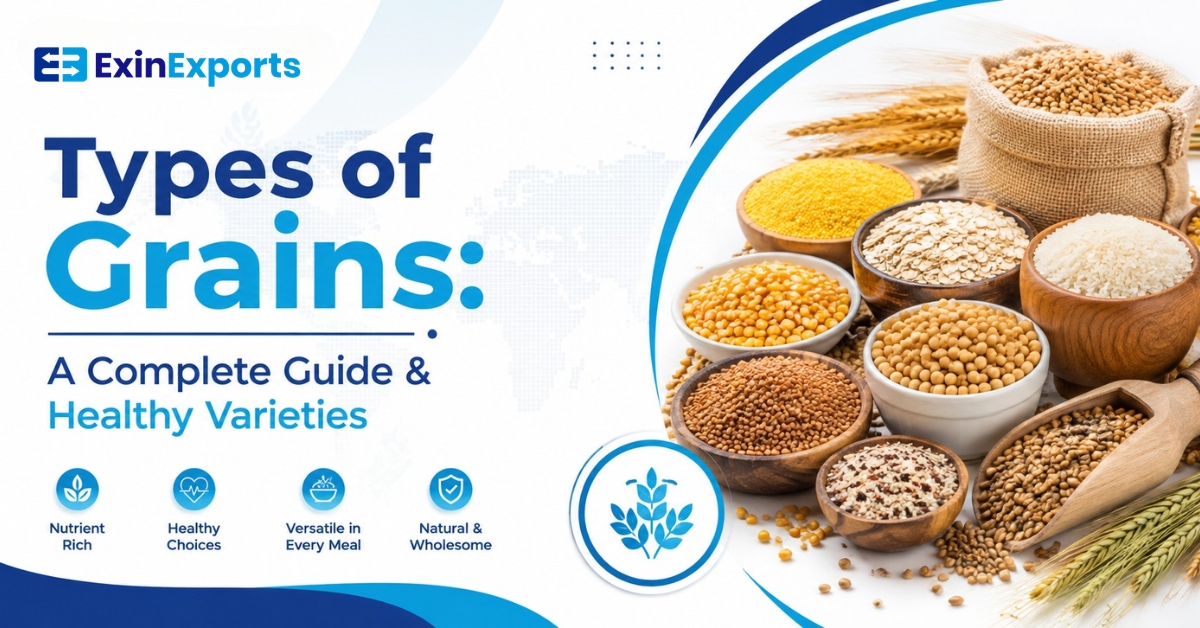
Grains have been feeding people for thousands of years, and honestly, they’re still doing most of the heavy lifting on dinner tables everywhere. Maybe you’re restocking your pantry and trying to figure out which bag of rice or flour actually makes sense for your family. Maybe you’re looking into the grain trade from a business angle and want to understand what buyers are actually asking for. Either way, knowing what separates one grain from another matters, for your health, for your cooking, and if you’re in the trade, for your bottom line too.
This guide walks through the different types of grains available today, why India has become such a significant player in global grain supply, and how you can make smarter choices whether you’re cooking dinner or sourcing product for export.
What Are Grains and Why They Matter
Grains are small, hard seeds harvested from grasses and grass-like plants. They end up in bread, rice bowls, morning porridge, snacks, and dishes cooked the same way for generations in kitchens around the world. Most cultures build entire cuisines around one or two staple grains, and that pattern isn’t an accident. Grains pack calories and nutrients enough to get a family through lean seasons and store and travel well.
There’s a business side to this too:
- Grains show up daily in bread, rice, porridge, and traditional snacks across cultures.
- Grain farming supports entire regional economies, not just individual households.
- The trade chain runs through farmers, mill operators, and export companies.
- Grain exports add up to a meaningful chunk of national agricultural income
India has carved out a solid spot in this space. The country grows and moves a wide range of grains, and demand for Grains Export From India has climbed steadily as overseas buyers look for suppliers they can actually rely on. Part of that reliability comes down to scale. India has the farmland, the labour, and the processing capacity to meet large orders without the delays that smaller producing nations sometimes run into.
A few reasons buyers keep coming back to Indian suppliers:
- Large, diverse growing regions that reduce dependency on a single harvest season
- Established port and logistics infrastructure for bulk shipping
- Competitive pricing compared to many Western grain exporters
- A track record of meeting international quality certifications
Different Types of Grains You Should Know
Grains generally split into two camps: whole grains and refined grains. The difference isn’t just technical either; it changes what you’re actually putting in your body every time you sit down to eat.
Understanding the different types of grains also helps when you’re reading nutrition labels or comparing products at the store. A lot of packaging uses vague terms like “multigrain” or “made with whole grain,” which can be misleading if you don’t know what to look for underneath the marketing language.
Whole Grains
Whole grains keep all three parts of the original seed intact, the bran, the germ, and the endosperm. That means more fibre, more vitamins, and more minerals stick around after processing. Brown rice, oats, quinoa, barley, and millet all fall into this bucket. Because the outer bran layer stays on, whole grains also tend to take longer to cook and have a slightly chewier texture compared to their refined counterparts.
What makes whole grains worth the extra cooking time:
- Higher fiber content that supports digestion and keeps you full longer
- Slower-digesting carbohydrates that help stabilise blood sugar
- More retained vitamins, including B vitamins and vitamin E
- A denser, nuttier flavour that many people prefer once they adjust to it
Refined Grains
Refined grains lose the bran and germ somewhere in the milling process. You get white rice and white flour out the other end, softer, with a longer shelf life, but a real chunk of the original nutrition goes with it. Plenty of manufacturers fortify these grains afterward to claw back some of what’s lost, adding back iron, folic acid, and B vitamins that milling strips away.
Neither category is inherently bad. Refined grains have their place, especially in recipes where texture and shelf stability matter more than fiber content. The key is knowing which one you’re reaching for and why.
How Many Types of Grains Exist Around the World
People ask this constantly, and the honest answer is that once you start counting regional and hybrid varieties, you’re well into the hundreds. The broad categories are easier to pin down: cereals like wheat, rice, corn, and barley, plus pseudo-cereals like quinoa and amaranth, which technically aren’t grains but get cooked and eaten the same way anyway.
So when someone asks how many types of grains actually matter for everyday cooking, the practical answer narrows down considerably. Most home kitchens rotate through six to eight staple grains, even in cultures where dozens of regional varieties technically exist. The key isn’t how many you have, but which grains are best for your climate, your cooking style, and what you can actually find at your local market.
The most widely traded grains globally include:
- Wheat, used in bread, pasta, and flatbreads worldwide
- Rice, a staple for more than half the global population
- Corn, used for food, animal feed, and industrial products
- Barley, common in brewing, soups, and animal feed
- Soybeans, technically a legume but often traded alongside grains
Wheat is one of the most traded grains on the planet and India has really made a name for itself here. Wheat Export From India will have a supply chain supported by fertile growing regions, strong milling infrastructure and years of practical export experience. Much of India’s wheat is produced in states like Punjab, Haryana and Madhya Pradesh, and much of it moves through well-established trade corridors built up over decades.
Indian Grains: A Rich and Diverse Tradition
Indian grains hold a particular place, at home and in international markets alike. From the wheat fields of Punjab down to the rice paddies of the south, what gets grown depends on climate, soil, and farming knowledge passed down for generations. This regional diversity means India isn’t just a wheat or rice exporter; it’s a source for dozens of grain varieties suited to very different culinary traditions.
Types of Grains in India
The grain varieties grown across India go well beyond wheat and rice. Millets like jowar, bajra and ragi have been the staple food for generations, especially in dry areas where they are grown with little water. These crops have seen a resurgence in recent years as both domestic and international buyers pay more attention to climate-resilient farming and nutrient-dense staples.
Pulses and legumes often get mentioned in the same breath too, since they’re stored and cooked in similar ways even though they technically belong to a different food group. Lentils, chickpeas, and various beans round out the picture of what a typical Indian pantry looks like, sitting right alongside the grain shelf in most households.
Indian cooking pairs grains with an enormous range of spices, and buyers researching Indian food exports often end up looking past grains toward these complementary products. Five Spice Powder, for instance, shows how Indian agricultural exports stretch into seasoning and flavor categories that naturally sit alongside grain-based dishes. Spice and grain exports often move through the same trade relationships, since buyers sourcing one tend to look for the other from a trusted supplier.
Five grain types you’ll find in most Indian kitchens:
- Rice – the daily staple across eastern and southern India
- Wheat – ground into flour for roti and chapati
- Millets – making a comeback for their drought tolerance and nutrition
- Barley – a regular in traditional soups and health drinks
- Maize – used both in cooking and as animal feed
Nutritional Benefits of Common Grains
Different grains bring different strengths, which is part of why sticking to just one type doesn’t really serve you well. A diet built entirely around white rice, for example, looks very different nutritionally than one that rotates in millet, quinoa, and oats throughout the week.
| Grain | Key Nutrient | Health Benefit |
| Brown Rice | Fiber | Supports digestion |
| Oats | Beta-glucan | Helps manage cholesterol |
| Millet | Iron | Supports energy levels |
| Quinoa | Protein | Aids muscle repair |
| Barley | Magnesium | Supports bone health |
Beyond the nutrients listed above, most whole grains also carry antioxidants and plant compounds that get stripped out during heavy processing. That’s part of why nutritionists tend to push whole grains over refined ones whenever cooking time and texture preferences allow for it.
A few other benefits worth knowing:
- Grains rich in fibre can help lower cholesterol over time
- Iron-rich grains like millet support energy and reduce fatigue.
- Whole grains are linked to a lower risk of heart disease in several studies.
- Protein-rich options like quinoa work well for plant-based diets.
How to Choose the Right Grains for Your Diet
What you pick depends on your health goals, your cooking habits, and honestly, sometimes just what’s sitting on the shelf in front of you. If you’re watching blood sugar, whole grains with a lower glycaemic impact make more sense, since they digest more slowly and avoid the sharp spikes that refined carbohydrates can cause. If dinner needs to happen fast on a weeknight, refined grains cook quicker, and that’s a fair trade for a lot of people juggling work and family schedules.
Rotating through different grains instead of leaning on one or two also helps. It widens your nutrient intake without you having to think too hard about it, and it keeps meals from getting stale. Swapping white rice for quinoa a couple nights a week, or trying millet in place of couscous, is a small change that adds up over time.
Quick Tips for Buying Quality Grains
Skip anything with visible moisture damage. Check packaging dates on processed grains before you buy. Store grains in airtight containers so pests and humidity can’t get to them. Buying in smaller batches more frequently also helps, since grains lose some of their flavour and nutritional edge the longer they sit on a shelf.
Quick checklist before you buy:
- Look for intact packaging with no tears or moisture spots.
- Check the harvest or packing date, not just the expiry date.
- Choose airtight, resealable bags or containers when possible.
- Buy smaller quantities more often rather than stockpiling in bulk.
Indian Grains in Global Trade
“Buyers want good, consistent quality at a fair price point and the demand for Indian grains keeps rising. The agricultural areas of India produce far more than sufficient for domestic needs and export in consistent volumes year after year. India’s grain sector is so resilient compared to smaller producing nations because it has to balance feeding a massive domestic population with maintaining export capacity.
That reputation isn’t limited to grains alone. Buyers digging into Indian Agricultural Products often find that India’s edge comes down to a mix of climate diversity, established farming methods, and export infrastructure built up over decades. Ports, cold storage networks, and quality certification systems have all matured significantly, which gives international buyers more confidence when placing large or recurring orders.
Conclusion
Grains are still one of the most useful food categories around, and knowing the differences between them helps you cook smarter, eat better, and, if you’re on the trade side, source with more confidence. Whole grains, refined grains, and regional Indian varieties – each one brings something a little different to the table, and there’s no single right answer for every kitchen or every business.
The best approach is usually the simplest one: lean toward whole grains when you can, rotate your choices instead of settling into a single habit, and pay attention to where your grains come from, especially if quality and sourcing reputation matter to you. Whether you’re planning meals at home or evaluating suppliers for a business, a little knowledge about grain types goes a long way toward making better decisions.
FAQs
Q1: What are the main types of grains?
Grains split into whole grains and refined grains, with rice, wheat, oats, and millet as common examples.
Q2: How many types of grains are commonly used in India?
India relies on a wide mix of rice, wheat, millets, barley, and maize, each suited to a different region and climate.
Q3: Are whole grains healthier than refined grains?
Generally yes, since whole grains keep the bran and germ intact instead of stripping them out during processing.