


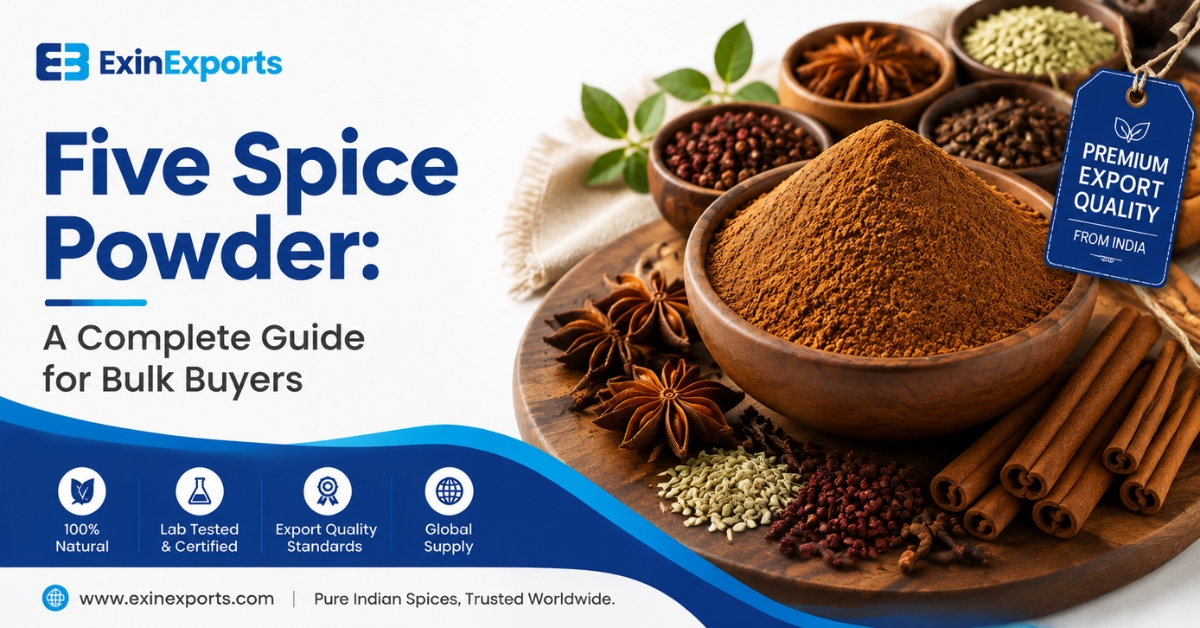
Five Spice Powder: A Complete Guide for Bulk Buyers
As one of the most used aromatic blends in Chinese and Asian cuisine, five spice powder is trending among restaurants, food manufacturers, and retail brands in India. If your business works with spice blends, you’ve probably already come across it. This article breaks down everything you need to know to source this spice reliably for your business.
What Is Five Spice Powder?
What is five spice powder includes five spices that are ground and blended to create a balanced combination of all the sweet, savory, and numbing notes. The name is attributed to the five basic taste elements that this particular blend encompasses.
Compared to other spices, what five spice powder is a finished spice blend, formulated from five individual spices that are ground separately and combined. This is not a random mix; therefore, consistency in source ingredients also matters, because a slight variation in the ratio will have a significant impact on the final flavor.
Chinese Five Spice Powder: Where It Comes From
Although Chinese five spice powder was traditionally used in Chinese cuisine for marinades, seasonings for roasted meats and braises, and stir-fries, it has since made its way beyond Chinese cooking. Today, it is used in all types of cuisines that incorporate spice blends.
Buyers in India who wish to meet restaurant, cloud kitchen, or export client needs will better understand these backgrounds when setting quality expectations. Egyptian, Turkish, or Indian Chefs may expect “spice powder” to be a random combination of any five spices, but for Chinese five spice powder, specific ratios and combinations of the right ingredients are important.
Ingredients for Five Spice Powder
The exact ingredients for five spice powder can vary slightly by region and brand, but the classic combination includes:
- Star anise for licorice-sugary flavor
- Clove for depth and warmth
- Cinnamon or Cassia for woody and sweet flavor
- Sichuan for numbing heat
- Fennel for an herbal finish
There are several spice powder varieties available, which may also include ginger or nutmeg for added spiciness, but the above combination remains the base. Purchasing individually each of the above ingredients and avoiding buying from uncertain suppliers will allow buyers to control both quality and consistency.
Why Sourcing Quality Matters for 5 Spice Powder
Bulk buyers often assume all five spice blends are more or less the same, but that’s not quite true. Two batches carrying the same 5 spice powder label can taste noticeably different depending on where the raw spices were sourced, how they were dried, and how fresh the final grind is.
A few things that affect quality:
- The moisture content in star anise and cloves affects shelf life.
- Fennel seeds lose their color and flavor over time due to the oils they contain.
- The aroma is lost quicker with pre-ground spice.
- The flavor of spices is impacted by where the spices are grown.
Sourcing Five Spice Powder From India
India has long been one of the more dependable places to source the raw materials behind spice powder, mainly fennel seeds and cloves, both of which grow well across several Indian states thanks to the climate.
Suppliers here tend to offer a solid mix of consistent quality, competitive pricing, and export infrastructure that’s already in place. So whether you’re putting together a private-label blend or sourcing ready-mixed spices for a food service client, India works as a practical base to build from.
In the broader context of Indian spices, customers have a selection of whole seeds or even ready-made fine powders, giving buyers more flexibility with spice mixing themselves or sourcing spice blends.
Practical Tips for Bulk Buyers
The following points will be of use when preparing to place a bulk order:
- Make sure to request a certificate of analysis for the moisture and purity levels.
- Ask the supplier to send physical samples, which must be tested in your actual recipes, not just by smell
- Ensure that the packaging is such that it protects against moisture during transit.
- Check the minimum order you are required to place against your storage and shelf-life requirements.
- Enquire if the blend is pre-mixed or if the ingredients are supplied in separate forms.
- Check if the supplier has the required documentation and certificates for export.
Related spices that you might want to familiarize yourself with while you’re at it include cumin, a spice that shows up frequently in adjacent spice blends and is discussed in more detail in this article on the increasing global interest in genuine Indian food flavors: Cumin Seed.
Common Mistakes to Avoid
The following are common mistakes made when purchasing 5 spice powder in bulk:
- Buying the lowest price without considering origin and freshness,
- Sending a sample request but skipping a sample order and going straight to a full container order,
- Assuming suppliers use the same ratios of ingredients.
- Ignoring the storage and moisture conditions during the transit of the spices.
These pitfalls, if solved early on, can save you both money and reputation, especially if you are dealing with a food brand where consistent flavor is of high importance.
Conclusion
The amount of flavor five spice powder adds is disproportionate to its size. Also, many buyers will learn sourcing is vital to the sustained success of both private label and restaurant and food manufacturer supply chains. Paying attention to the ingredients, their quality markers, and the sourcing avenues available empowers both negotiation and the maintenance of consistency, order after order. Reliability and scale of bulk sourcing make India one of the preferred sourcing areas for the raw spices behind this blend.
FAQs
Q1. What spices make up five spice powder?
The spices are ground together as a blend along with star anise, Chinese cinnamon, cloves, fennel seed, and Sichuan peppercorn, and some varieties use powdered ginger.
Q2. Will the blend be the same worldwide?
The consistency of a blend will depend on the region and supplier due to varying ratios and quality of the raw materials. Therefore, sourcing from a reputable supplier is very important.
Q3. Can I swap fennel seeds?
Replacing the fennel seed will change the overall blend and should be avoided.
Q4. How do I store it to maintain its longevity?
Keep it in an air tight container and out of direct sunlight in a dark, cool place.
Q5. Where do I find bulk ingredients for five spice powder from India?
India has established a reliable export path of bulk raw ingredients of fennel seeds and cloves.