


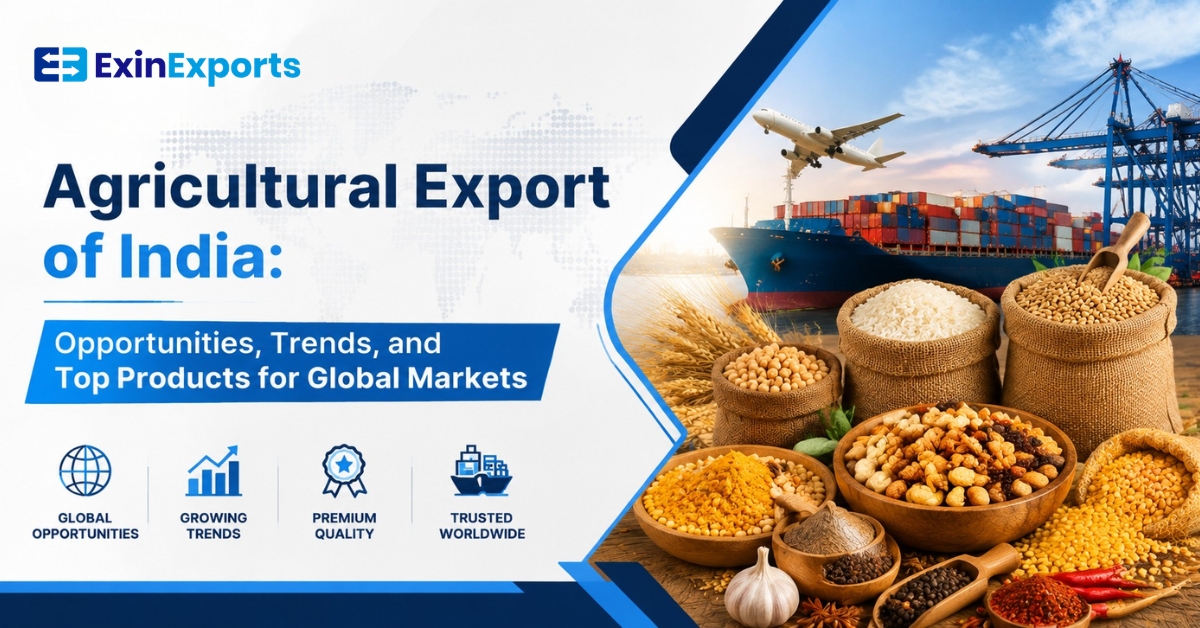
Agricultural Export of India: Opportunities, Trends, and Top Products for Global Markets
India has always been blessed with rich agriculture, and today, agricultural export of India are one of the most important sectors of the economy. Indian agriculture, from the plains of Punjab to the farms along the Kerala coast, is headed for dinner tables around the world. With the growing demand for food, India is emerging as a quality provider of agricultural products and positioning itself as one of the world’s largest agricultural exporters.
The Growing Strength of Indian Agricultural Exports
The reasons for the sustained increase in the agricultural export of India are many, such as, favorable agro-climatic conditions, government policies and the worldwide increasing demand for Indian products. The Agriculture Export Policy (AEP) of India is providing a formalized framework for the export of agricultural products from India. The AEP is working to enhance infrastructure and improve market access and compliance with quality standards.
APEDA (Agricultural and Processed Food Products Export Development Authority) develops and supports agricultural export of India by providing aid to producers, processors, and exporters in enforcing international standards. Agri export in India are on an upward trend and Indian commodities are reaching further markets in the Middle East, Europe, the USA, Southeast Asia and beyond. Several aspects are encouraging the growth of Indian agricultural exports. They include:
- Worldwide need for Indian organic and natural produce is on the rise.
- Better bilateral trade deals are creating new export corridors.
- AEP is an incentive provided by the Indian government to agrarian exporters.
- Port infrastructure is better and provides quicker and safer transit.
- Indian exporters are adopting food safety certifications.
India’s Position Among the World’s Largest Agricultural Exporters
The Indian subcontinent is among the top exporters of agriculture in the world, along with the agricultural exporting giants of the USA, Brazil and the Netherlands. India’s agricultural exports dominate the world in rice, spices, marine and fresh produce. The bulk of agricultural export of India is unique because no other country exports the range of food products to as many destinations as India.
India’s agriculture is diverse. Most countries that buy agriculture products import dissimilar products, as in the case of grains, spices or vegetables or other products. Indian agricultural export that are certified by FSSAI, FIEO, MSME, and the Spices Board are focusing on raising the standards that today’s buyers expect. Agricultural export of India gradually builds prestige and trust for International Markets year on year. Explore the wide range of high-quality Agro Products available for export from India.
India’s Growing Impact on Global Agricultural Trade
India’s diverse agricultural export products showcase the country’s presence in the global markets, much like the natural diversity located within Indian territory. India’s agricultural exports serve an impressive range of international demands. In-demand agricultural export of India products include the following:
- Global kitchen staples cumin, turmeric, coriander, cardamom, and pepper
- Wheat, rice, and millets that feed countless people in Asia and Africa
- Cashews, raisins, and almonds that cater to global premium markets
- Onion and garlic powders and flakes that are used in food processing around the world
- Organic foods that are becoming more popular in the health-conscious markets of Europe and North America
These agricultural export products highlight that India offers not only raw commodities but also a wide range of value-added exports that meet international demand. The Growing Global Need for Real Indian Flavors has further strengthened India’s position in global markets, as buyers continue to seek authentic, high-quality agricultural products. These exports are supported by strict quality control measures and a strong commitment to global food safety and quality standards.
Obstacles and Prospects in Agricultural Exports in India
Agriculture exports in India are on a strong growth trajectory. However, some challenges that require ongoing efforts include:
- The ability to comply with more stringent quality and phytosanitary requirements of the importing countries
- Post-harvest losses due to inadequate cold chain facilities
- Addressing price fluctuations for volatile export commodities
- An ability to control seasonal fluctuations in supply
- Enhanced recognition for Indian agroproducts in premium markets
Despite these challenges, the prospects are much greater. The agri export in India are going strong, in part due to the rise in global demand for organic and natural food, for which Indian agro exporters have a distinct competitive edge. With the appropriate interventions and policy support, the potential for Indian agricultural export is immense over the coming years. Indian food processing industries are increasingly relying on Dehydrated Onion Garlic Powder Flakes for consistent supply and convenience.
India’s Agriculture Export to Global Premium Markets
It is no longer just bulk commodities dominating the agricultural export of India. Value-added and processed agroproducts are fast making their way to premium shelf space in supermarkets in Europe, the Gulf and North America. Indian agricultural export are investing in the establishment of modern processing facilities, hygiene-compliant packaging and systems of traceability to cater to these changing buyer requirements.
Exporting everything from cold-pressed oils and basmati rice to pulses and organic items, the export of agricultural products from India is focusing on the evolving tastes of international markets. This is starting to bolster the agricultural trade of India by volume and value of products, improving India’s place in the league of the world’s largest agricultural exporters.
Conclusion
The agricultural export of India are gaining prominence in global markets while growing in scope and variety. With high reliability and quality benchmarks, the position of Indian agricultural exports is going to improve in the foreseeable future. Connect with exinexports to source certified agricultural products and expand your global reach.
Frequently Asked Questions
Q1. What products of agricultural export does India have?
India exports rice, spices, grains, dried fruits, dehydrated vegetables, organic foods to markets in Asia, Europe, the Middle East and Americas.
Q2. How is government supporting agri-export in India?
The government backs the agri export in India with the Agriculture Export Policy and APEDA and supports exports by improving standards and infrastructure and gaining access to the international markets.
Q3. Why is India among the world’s largest agricultural exporters?
India’s diverse agro-climatic zones, wide product range, and strong policy support make the agricultural export of India one of the most competitive among the world’s largest agricultural exporters globally.