

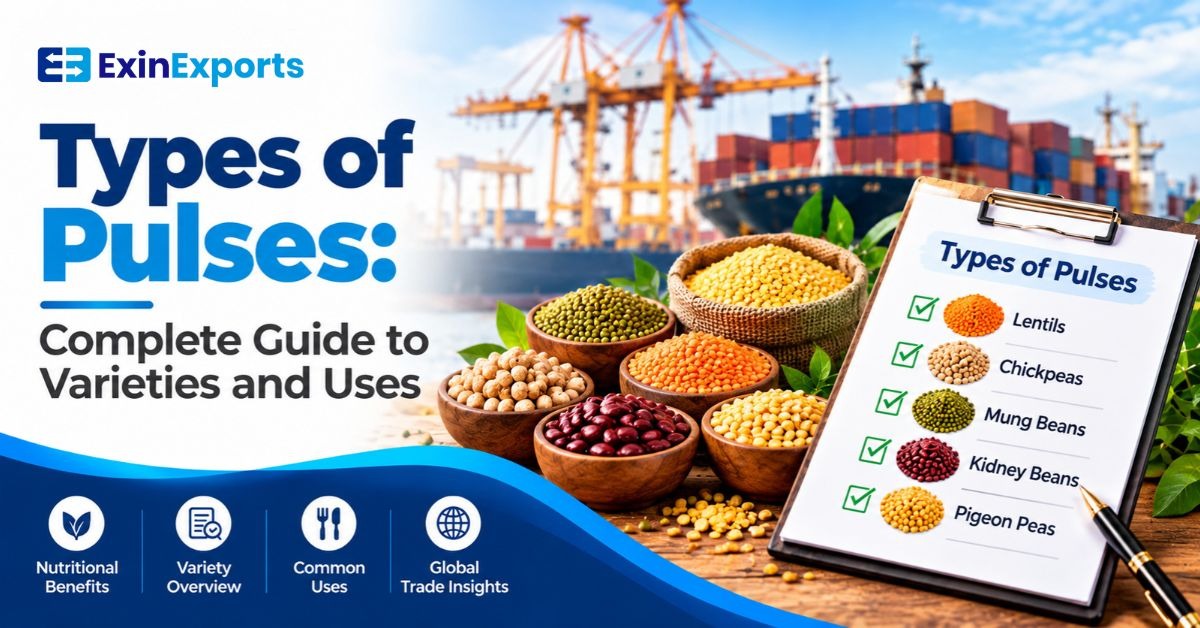
Pulses are the dried seeds of legume plants, and most Indian kitchens open at least one jar of them every day. The common types of pulses are chickpeas, pigeon peas, lentils, green gram, black gram, kidney beans and dry peas. Here we just call them dal. For a lot of vegetarian families, that bowl of dal is the main protein of the day.
India grows more pulses than any other country and eats more of them too. That’s why a food brand in Dubai or Toronto that wants steady stock will usually start by finding a pulses exporter in India. Trade runs the other way as well. When the monsoon is weak and the harvest comes in short, pulses importers in India buy from abroad to fill the gap.
None of this moves without paperwork. If you plan to ship pulses out of the country, start with our guide on the APEDA Registration Process, which covers the documents, fees and timelines.
What are pulses?
The FAO uses the word “pulse” only for legumes harvested as dry seed. Fresh green peas and French beans count as vegetables, and soybeans and groundnuts count as oilseeds. So even though they’re all legumes, none of them are pulses.
Pulses are high in protein and fibre and low in fat. Farmers like them for another reason: their roots fix nitrogen in the soil. That’s why you’ll often see chana sown after the rice harvest, or moong grown in the summer gap after wheat.
Main types of pulses and their Indian names
Here’s a quick pulses list with English and Hindi names, the forms you’ll usually find, and what people cook with each one.
| English Name | Hindi Name | Common Forms | Popular Uses |
| Chickpea (Kabuli) | Kabuli Chana | Whole | Chole, hummus, salads |
| Chickpea (Desi) | Kala Chana / Chana Dal | Whole, split, flour | Curries, besan, snacks |
| Pigeon Pea | Toor / Arhar Dal | Split | Sambar, everyday dal |
| Lentil | Masoor Dal | Whole, split | Soups, quick dal |
| Green Gram | Moong Dal | Whole, split | Khichdi, sprouts, halwa |
| Black Gram | Urad Dal | Whole, split | Idli, dosa, dal makhani |
| Kidney Bean | Rajma | Whole | Rajma chawal, salads |
| Dry Peas | Matar | Whole, split | Ragda, soups |
| Horse Gram | Kulthi | Whole | Rasam, soups |
| Cowpea | Lobia | Whole | Curries, salads |
| Moth Bean | Moth | Whole | Sprouts, usal, namkeen |
Chickpeas (chana)
Chickpeas are India’s biggest pulse crop. Kabuli chana is the large, cream-coloured one you use for chole or hummus. Desi chana is smaller and darker. Most of it gets split into chana dal or milled into besan, which ends up in pakoras, dhokla, sev and half the namkeen aisle.
Pigeon peas (toor dal)
Toor dal, or arhar, is the everyday yellow dal in Gujarat, Maharashtra and the South, and sambar doesn’t work without it. People eat it with rice or roti for a reason. Cereals and pulses fill each other’s protein gaps, so the meal is more complete when you eat them together. Our guide on Types of Grains covers the cereal half of that plate.
Lentils (masoor dal)
Red split masoor is the quickest dal you can make. Rinse it, boil it, and it turns soft in about 15 to 20 minutes, and you don’t need to soak it first. Whole brown masoor holds its shape better, so it works well in soups and salads.
Green gram and black gram (moong and urad)
Moong is the gentle one. It’s easy to digest, which is why most of us were given yellow moong dal khichdi as kids whenever we fell sick. Whole green moong is used for sprouts, and moong dal halwa shows up at most weddings. Urad is heavier and a little sticky. That stickiness is exactly why it gets ground with rice for idli and dosa batter, and whole black urad is the base of dal makhani.
Kidney beans, peas and other pulses
Rajma is a North Indian Sunday staple. Dry white peas go into ragda for ragda pattice, and dried green peas go into soups. Then there are the regional ones: kulthi (horse gram), lobia (cowpea) and moth bean. They grow well with very little water, and health food brands have started to notice them.
Health benefits of different types of pulses
Eating more dal is one of the easiest diet upgrades you can make. A few reasons why:
- Most pulses have around 20 to 25 percent protein by dry weight.
- The fibre helps digestion and keeps you full for longer.
- They have a low glycaemic index, so blood sugar rises slowly after a meal.
- You get iron, folate, magnesium and potassium in the same bowl.
- They are naturally gluten free.
How pulses are used in food and industry
Outside the home kitchen, pulses go into more products than most people expect. Chickpea flour and pea flour show up in snacks, pasta and bakery mixes. Pea protein is one of the main ingredients in plant-based meat and milk. Canned chickpeas and ready-to-eat dal pouches also sell well in supermarkets abroad, especially in cities with a large Indian population.
What buyers check before sourcing pulses
An overseas brand and the pulse importers in India look at mostly the same things before they approve a lot:
- Moisture, which should usually be 12 percent or lower so the stock doesn’t grow mould in transit.
- How much foreign matter is mixed in, such as stones, husk, dust or other seeds.
- The share of broken or damaged grain, since a lower number means a better grade and a better price.
- Whether size and colour are even, which matters a lot for retail packs.
- Paperwork, meaning the phytosanitary certificate, fumigation report and residue tests the destination country asks for.
Pulse importers in India mostly bring in tur, urad, lentils and yellow peas from Canada, Australia, Myanmar and East Africa. Pulses importers in India also keep a close eye on government policy, because import duties and quotas can change from one season to the next.
Why work with a pulses exporter in India
Very few countries can match India’s range. You can get bold kabuli chana, polished toor, and urad in whole, split and washed forms. Mills in Gujarat, Madhya Pradesh and Maharashtra clean, grade, split and polish pulses to the buyer’s spec, and shipments go out under HS code 0713.
A good pulses exporter in India can supply your whole pulses list from one place, pack it under your brand and handle the export documents. That’s less work than managing five small suppliers, and less risk too. Domestic traders and pulse importers in India use the same mills to clean and repack imported stock.
Choosing the right pulse for your market
Demand changes by region. Gulf buyers mostly want toor and chana dal. Western supermarkets lean towards chickpeas and red lentils. Indian grocery stores abroad stock nearly everything. Putting the right types of pulses in front of the right customers is what brings repeat orders. For a wider look at how Indian ingredients are selling overseas, read Authentic Indian Flavors.
Conclusion
Once you know the main types of pulses, picking between chana, toor, moong, urad and masoor gets a lot easier, whether you’re cooking dinner or filling a container. Each one cooks differently and suits different dishes. For businesses, the basics are simple: a clear pulses list and tight quality specs.
Frequently asked questions
Q1. What are the main types of pulses?
Chickpeas, pigeon peas, lentils, green gram, black gram, kidney beans and dry peas.
Q2. Which pulse has the most protein?
Lentils and black gram are near the top, with roughly 24 to 25 percent protein by dry weight.
Q3. Where do pulses importers in India buy from?
Mostly from Canada, Australia, Myanmar and East Africa, depending on the pulse and the season.